The Story
Patricia had been asked to turn a successful freelance project into a short case study.
The client wanted something clear enough to publish on a website and professional enough to send to potential partners.
Patricia liked the assignment.
She already knew the story.
The campaign had started late, the team had reorganized quickly, and the final launch had still performed well.
All she had to do was explain what happened.
She wrote the first paragraph without much trouble.
Then the second.
Then the third.
By the time Draft climbed onto the desk, Patricia had already written almost a thousand words.
“Fast,” Draft said.
“I know.”
“That was not automatically a compliment.”
Patricia stopped typing.
Draft pointed to one sentence.
Because the campaign launched two weeks late.
Patricia read it.
Then read it again.
“What?”
Draft tilted his head.
“Because the campaign launched two weeks late… what?”
Patricia frowned.
“The team had less preparation time.”
“Then where is that part?”
She looked back at the paragraph.
The line stood alone between two complete sentences.
Because the campaign launched two weeks late.
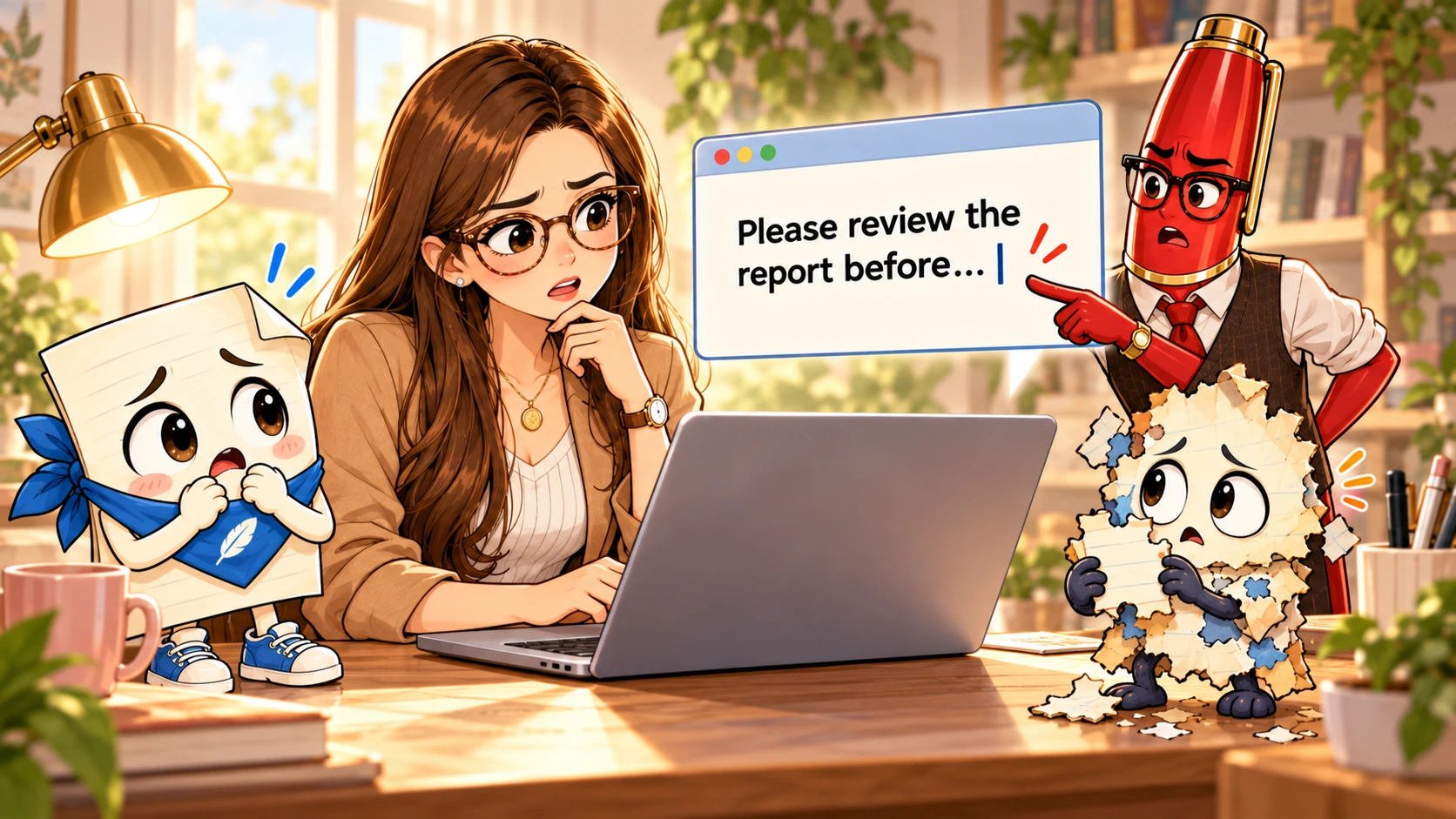
It sounded important.
It also sounded as if it had walked into the room and forgotten why it came.
Mr. Red Pen appeared beside the keyboard.
He adjusted his glasses.
“At last.”
Patricia looked at him.
“At last what?”
“A sentence I can object to without starting a philosophical discussion.”
The Missing Half
Patricia connected the line to the sentence after it.
Because the campaign launched two weeks late, the team had less preparation time.
“That is better,” Mr. Red Pen said.
Patricia nodded and continued reading.
A few lines later:
While the design team was still revising the landing page.
She stopped.
Draft waited.
Patricia sighed.
“Something is missing.”
“Yes.”
She fixed it.
While the design team was still revising the landing page, the marketing team prepared the launch emails.
Then another:
Which created confusion during the first week.
Patricia leaned back.
“How did I write so many of these?”
“You were moving quickly,” Draft said.
Mr. Red Pen tapped the page.
“You were writing parts of thoughts.”
A small tearing sound came from the notebook.
Patricia froze.
The corner of one page lifted.
Something crawled out from underneath it.
The creature looked as if it had been made from a torn piece of paper. One side of its body ended in a rough ripped edge. It carried half of a punctuation mark like a broken sign.
It looked at Patricia.
Then said:
“Because.”
Patricia waited.
The creature said nothing else.
Draft pointed.
“Fragment.”
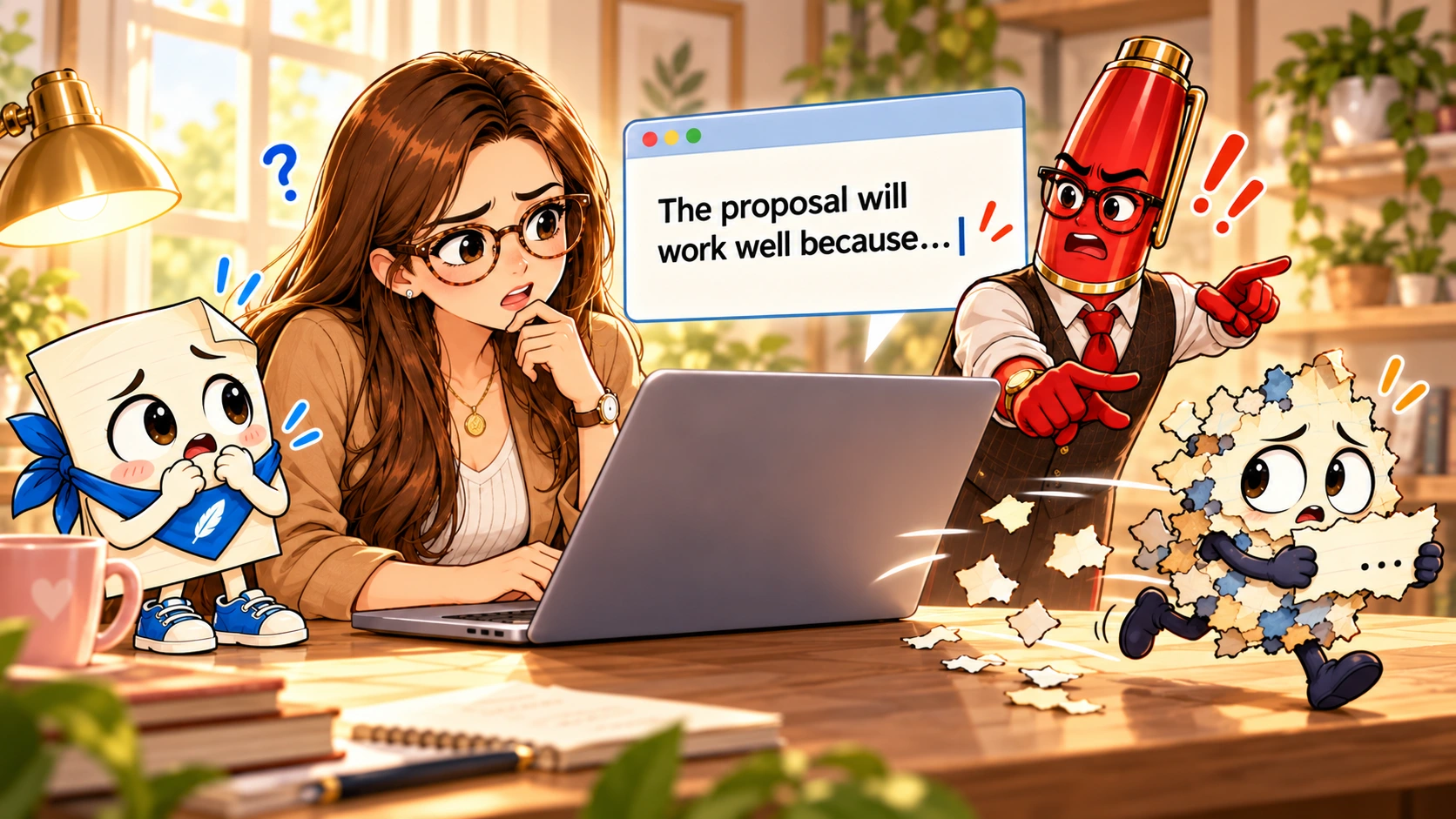
The creature smiled.
“While.”
Then it stopped again.
Patricia stared at it.
“That is extremely annoying.”
Fragment looked pleased.
Draftspace
The room folded into white paper.
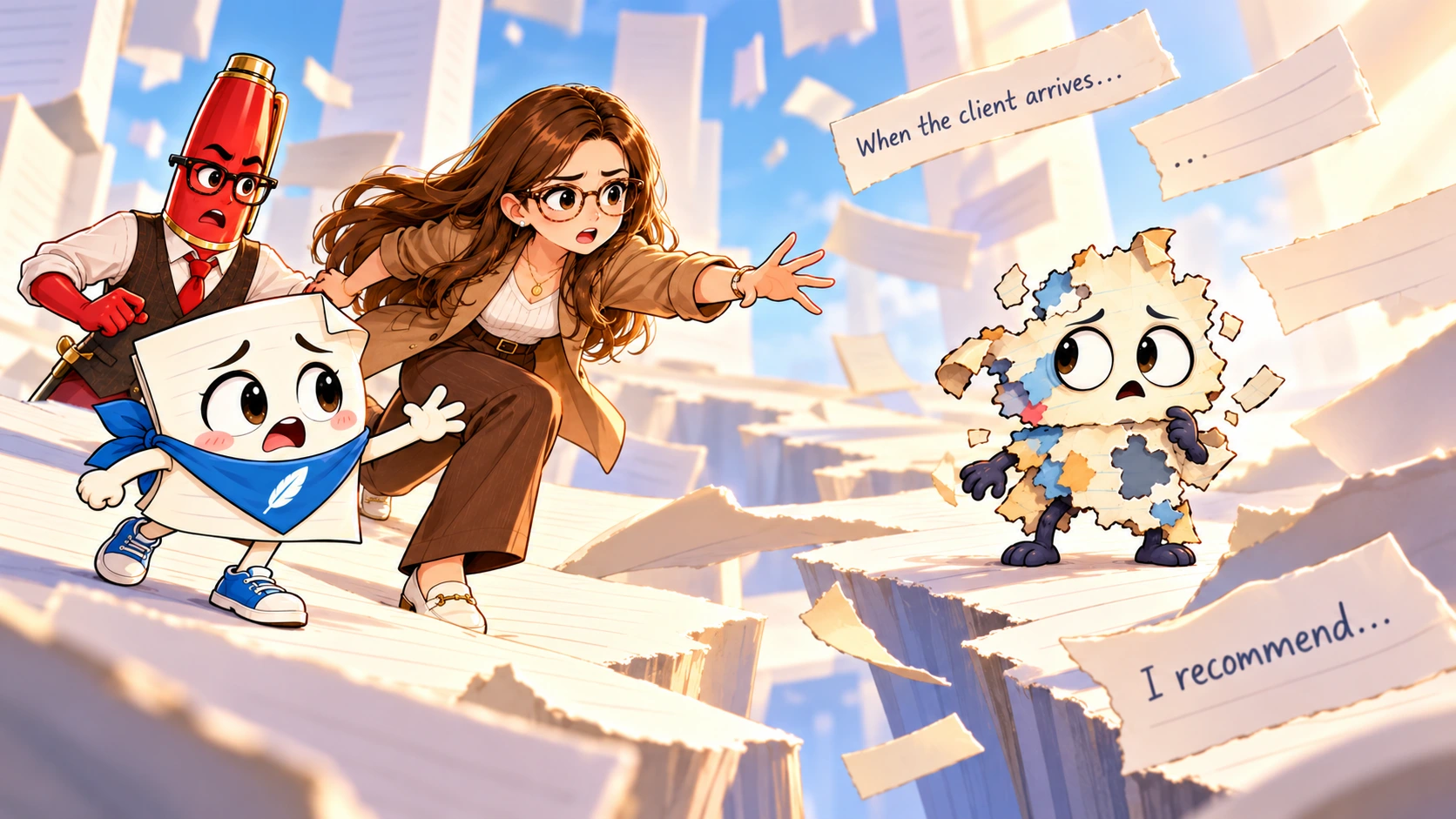
Patricia found herself standing on one side of a bridge.
The bridge ended halfway across a wide gap.
On the broken planks were the words:
Because the campaign launched two weeks late...
On the other side of the gap floated:
...the team had less preparation time.
Fragment sat happily on the unfinished edge.
Draft stood beside Patricia.
“A fragment is not always wrong because it is short.”
A second path appeared.
It contained one word:
Stop.
The path was complete.
Patricia looked surprised.
“That can be a sentence?”
“Yes. It has a complete meaning in context.”
Another appeared:
After the meeting.
The path ended suddenly.
Patricia looked across the gap.
“It needs more.”
“Usually, yes.”
Draft pointed toward the unfinished bridge.
“The problem is not length. The problem is whether the thought is complete.”
Mr. Red Pen arrived carrying several boards.
“I have been saying this for years.”
“No,” Draft said. “You have been saying every short sentence looks suspicious.”
Mr. Red Pen became quiet.
Patricia smiled.
Intentional or Accidental
Back at her desk, Patricia opened DeskDraft’s Grammar / Sentence Completeness Check.
The tool highlighted several places where dependent clauses or incomplete thoughts were standing alone.
But it did not mark every short line as automatically wrong.
Patricia tested a heading:
The Result
No problem.
She tested:
Why it worked.
Draft looked at the page.
“As a heading, that can work.”
Then:
Because the client changed the deadline.
DeskDraft flagged it as incomplete in the body paragraph.
Patricia understood the difference.
The same group of words could work in one place and fail in another.
Context mattered.
She revised the case study carefully.
Because the campaign launched two weeks late, the team had less preparation time.
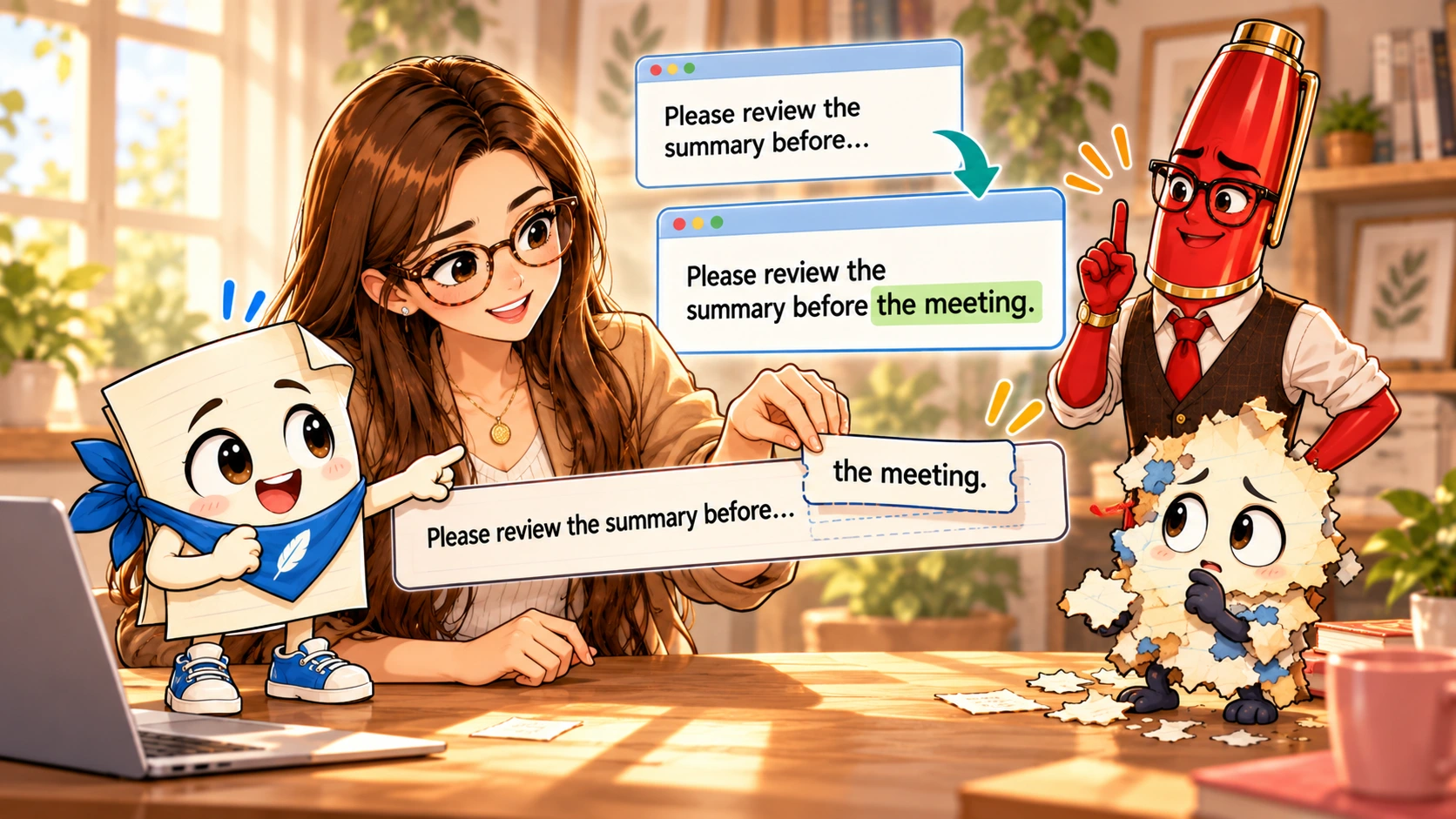
While the design team revised the landing page, marketing prepared the launch emails.
The sudden deadline change created confusion during the first week.
She did not make every sentence long.
She kept several short lines where they added emphasis.
The launch was late.
The team adapted.
The campaign worked.
Mr. Red Pen examined them.
“No objection.”
Patricia smiled.
“You really are capable of growth.”
He pretended not to hear her.
The Client Reply
The next morning, the client replied.
This is much easier to follow. The case study feels polished without sounding heavy.
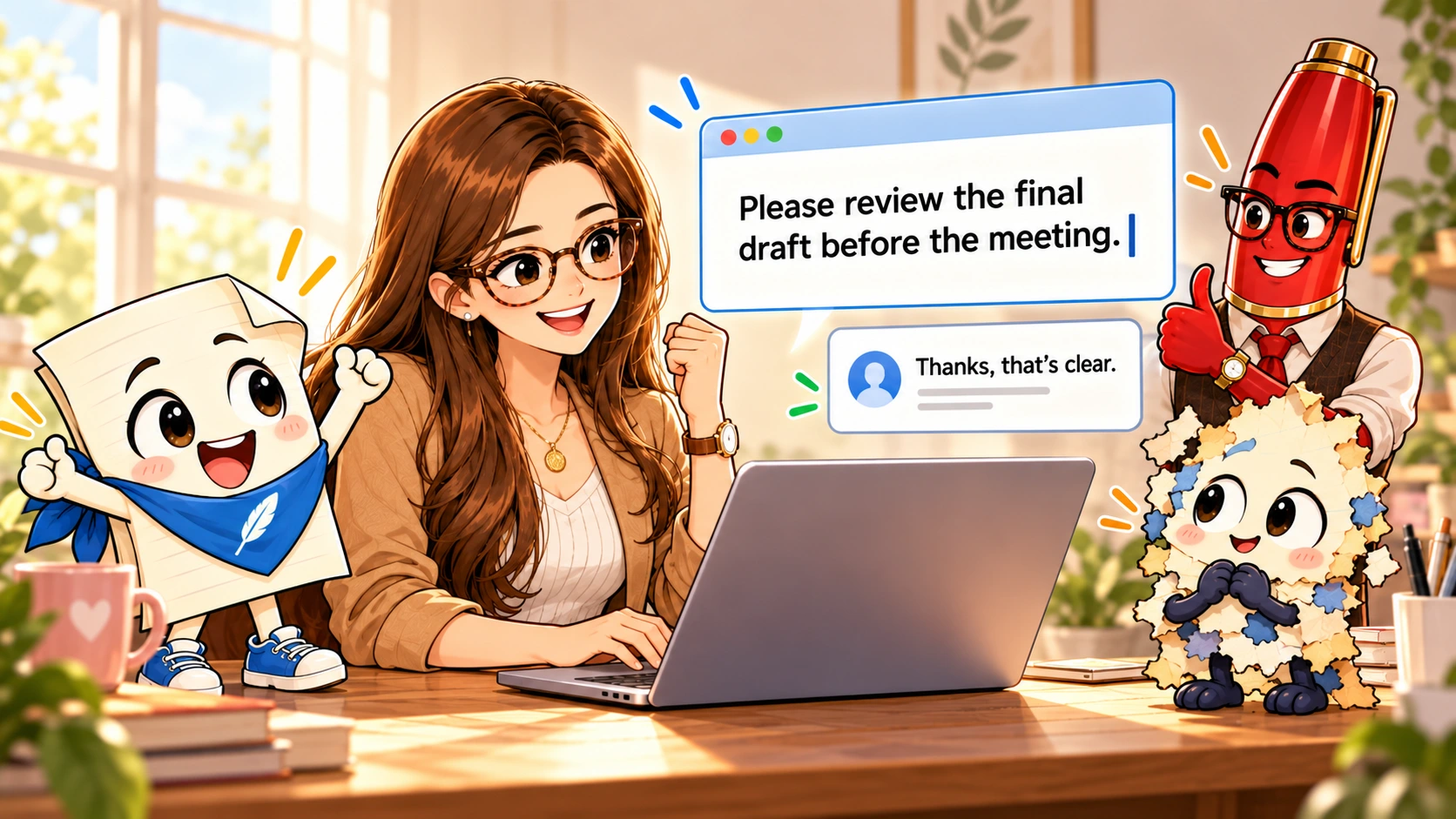
Patricia read the message again.
Polished without sounding heavy.
She liked that.
She had once believed professional writing needed longer sentences.
Now she was learning something different.
A sentence did not need to be long.
It needed to be complete.
The Notebook
Patricia opened her Draftling notebook.
Fragment climbed onto the page and sat beside the margin.
She wrote:
Draftling #006 - Fragment
Represents: Incomplete sentences and unfinished thoughts.
Weakness: Check whether the sentence can stand as a complete idea. Connect dependent clauses to the thought they belong to.
DeskDraft Feature: Grammar / Sentence Completeness Check.
Fragment held up its broken punctuation sign.
Patricia added:
Short does not mean wrong.
Incomplete does not mean stylish.
Use fragments intentionally, not accidentally.

Draft read the note.
“That one is complete.”
Fragment frowned.
Then whispered:
“Because...”
Patricia closed the notebook before it could continue.